
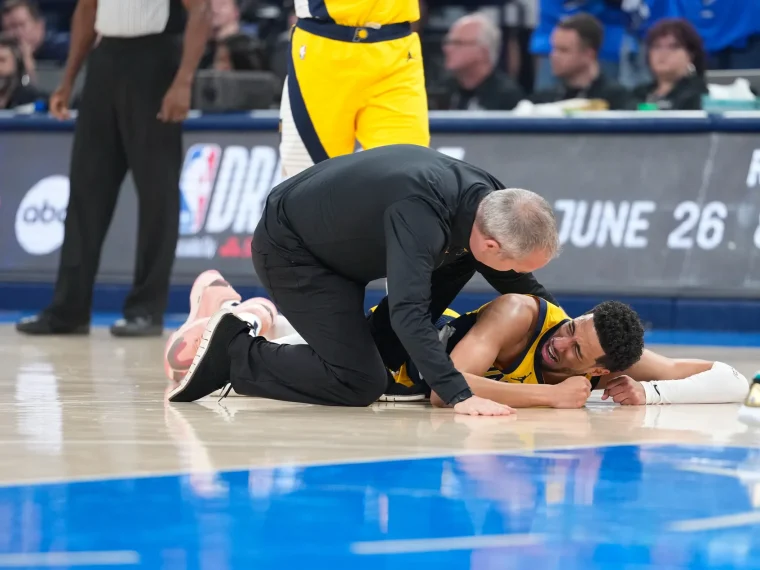
It wasn’t difficult to foresee. When Tyrese Haliburton went down in Game 7 of the 2025 NBA Finals, it was clear that the Indiana Pacers had an uphill fight that night and a steep decline awaiting them after the final buzzer sounded. The Pacers fought, even led at halftime, but Oklahoma City prevailed, and reality soon set in. Rather than a preamble to a prolonged stay at the top of the NBA standings, their Cinderella run would quickly seem like fiction, a figment of a future they would never be on track for again.
The Pacers have started the 2026-27 season 2-6. On Sunday night, they lost to the previously winless Brooklyn Nets. Given the bevy of injuries that have piled up for Indiana, that may not be as bad as it seems. Haliburton is sidelined with a strained hamstring, and one of the many lasting effects of a foundation-altering injury like an Achilles tear is that every subsequent strain demands a cautious approach, even more so than the one typically afforded an NBA superstar. Ivica Zubac has been out since the third game of the season when he sprained his ankle; Ben Sheppard will miss months with a torn meniscus; and T.J. McConnell is working through his own hamstring troubles.
But watching what is left of the Pacers struggle mightily with the Nets, it was hard not to see a team that is hollow, and well short on the kind of difference-maker talent necessary to compete in a revitalized Eastern Conference. Aaron Nesmith, whose incendiary postseason tear in ’25 is a big reason Indiana got to the Finals, is shooting 30 percent from 3 to start the season.11 Nesmith shot 49 percent on 122 attempts in the playoffs that season, including the virtuoso 8-of-9 display from deep in Indiana’s iconic comeback in Game 1 of the Conference Finals at MSG. Pascal Siakam is 32 and still one of the most well-rounded forwards in the game, but as the primary scoring option, he’s outclassed by several of his peers. Andrew Nembhard is the one player who, on paper, has benefited from the extra opportunities, but he’s a paradoxical player of sorts: the higher his per-game averages, the less likely it is your team is succeeding. This is not a knock on him, but rather a clarification that his role on that Finals team — his scoring and playmaking contributions fluctuating while his feel for tempo and defensive guile remained constant — is his ideal place in a team’s hierarchy.
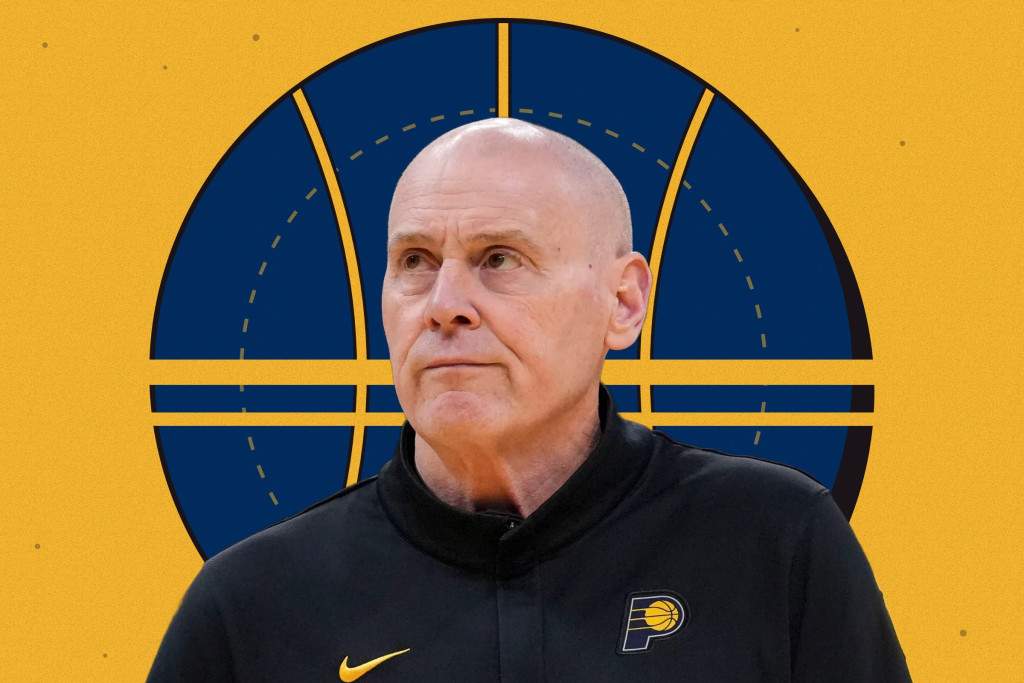
All of this to say what was obvious in 2025: those Pacers were far greater than the sum of their parts. It follows that, as those parts have been plucked away, depreciated or debilitated, Indiana has fallen further from the summit. Rick Carlisle is one of the game’s master tacticians, and the concinnity he elicited from that ’25 team was one of the finer coaching jobs in NBA history. But he’s a tactician, not a necromancer. He will not be able to reanimate the sui generis squad that came within two quarters of a title because it has already been split apart.
Actually winning the title would not necessarily have solved this problem, either. In fact, winning can hasten troublesome times, as a title confers a measure of immunity upon frugal (and overconfident) owners who tend to abuse it in the form of cost-cutting measures. Concurrently, the glimmer of a championship ring usually adds to a player’s market value (whether that perception is merely personal or market-wide is largely irrelevant). Players with a big role in a championship run want to get paid, and owners’ willingness to dish out massive extensions and pay enormous luxury tax penalties is often softened by the ring itself.
After his Mavericks won the 2011 title, Mark Cuban refused to reward Tyson Chandler for anchoring Carlisle’s defense; the next season, Dallas was a 7-seed starting Brendan Haywood and Delonte West in the playoffs. Even had the Pacers won the championship, it’s hard to imagine Myles Turner would have stuck around. The Knicks, whose Finals run wasn’t quite as surprising as Indiana’s but nonetheless carried a certain David-versus-Goliath ethos around a synchronous and unjaded core, now face a dilemma involving Karl-Anthony Towns and the nearly $300 million extension he is eligible for. And now even the Thunder, full of dynastic potential when they defeated Indiana, are fast approaching an untenable tax bill with two core pieces (Jalen Williams and Chet Holmgren) who faced constant injury issues.
Adam Silver has ushered the NBA into a revolving-door era. The league’s various financial constraints will make it difficult for championship teams to remain on top in the way the Heat, Warriors and Cavs did in the 2010s. The teams that lose in the Finals will face the same budgetary concerns without the validation and elation of the title. And if the structural conditions of the league weren’t hard enough to contend with, the Pacers also had to forfeit an entire season due to Haliburton’s injury.
The CBA made Indiana’s decline likely; the front office made it steeper. The deconstruction of the Pacers began in the offseason after their Finals appearance, when Turner left for Milwaukee, leaving an obvious gap in the frontcourt. Going 19-63 while Haliburton rehabbed was expected; trading the lottery pick that gave the suffering a tinge of optimism was not. As the Clippers began their fire sale last season, Pacers president of basketball operations Kevin Pritchard saw an opportunity to acquire a starting-caliber center in Zubac and erred in parting with not only a potentially franchise-altering first-round pick, but also Bennedict Mathurin, a 24-year-old wing who had two explosive performances in the ’25 Finals, including leading the Pacers in scoring in Game 7. While Indiana might have been unlucky to have its pick convey at No. 5 in this summer’s draft after only protecting it 1 through 4, the trade itself was inadvisable to begin with.
Most of the names from Indiana’s Finals rotation are still on the roster, but given the delicate balance of its success, only a facsimile remains. The team hasn’t lapsed into hebetude — Carlisle still extracts effort and craft even on nights when the talent isn’t available — but certainly the group has lost its aura. A night after losing to the Nets, the Pacers found themselves with only six available players against the Atlanta Hawks: Braden Smith, Quenton Jackson, Jarace Walker, Jalen Slawson, Jay Huff and Kobe Brown.22 Among these, only Jackson and Walker were on the Finals team. Neither appeared against the Thunder. It was the first time an NBA team had fielded such a shallow roster since the Pacers could only dress six players following the “Malice at the Palace” in November 2004.
The Pacers scrapped and made a game out of the somewhat farcical contest. In Carlisle fashion, the six players collected 22 assists on 38 baskets, but they also turned the ball over 18 times and couldn’t buy a basket from deep. Their spirited effort came up short, 108-104. In the coming days and weeks, Haliburton and Zubac will return, and Indiana will find form and compete for a playoff spot. What’s devastating is that, despite having been within grasp of the game’s ultimate prize two seasons ago, that is all these Pacers can hope to achieve.
Discussion
Subscribers